
F1 Sprint Races: Are Points Awarded in Formula 1 Sprint Races—and How Many?
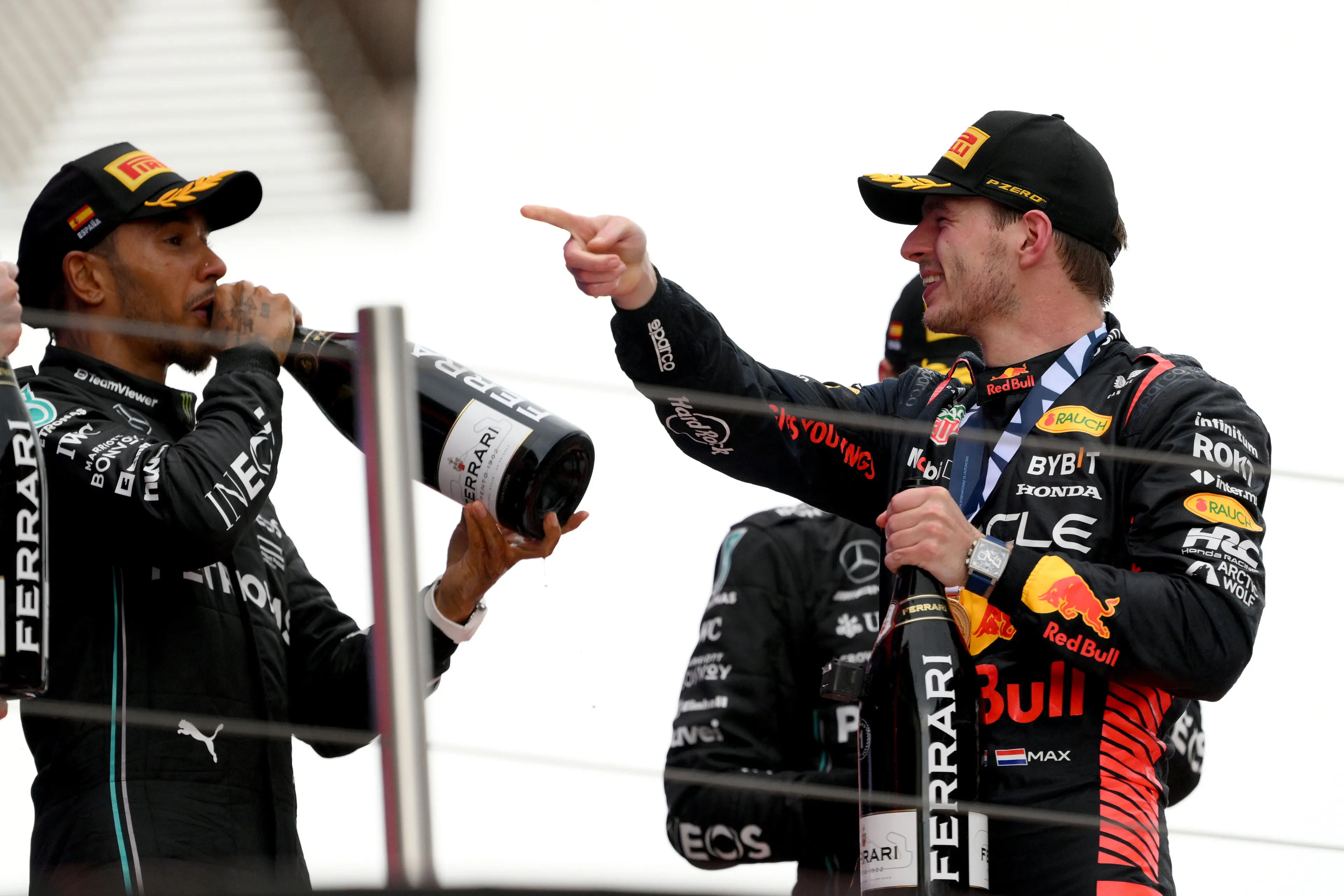
How F1 sprint races work
F1 Sprint races award points to the top eight (8–1). Learn the format, schedule, and how these Saturday points impact Drivers’ and Constructors’ championships.
Short answer
Yes. Points are awarded in F1 Sprint races to the top eight finishers:
- 1st: 8 points
- 2nd: 7
- 3rd: 6
- 4th: 5
- 5th: 4
- 6th: 3
- 7th: 2
- 8th: 1
There’s no fastest-lap point in a Sprint. These points count toward both the Drivers’ and Constructors’ Championships.
What exactly is an F1 Sprint?
Think of the Sprint as a high-intensity, 100 km dash that lasts about 25–30 minutes—no mandatory pit stops, no tyre changes unless you want them, and no time to breathe. It’s designed to add jeopardy and entertainment to the weekend without overshadowing Sunday’s Grand Prix.
How 2025 F1 sprint races work: qualifying shootout, points and schedule
F1’s 2025 Sprint races are bite‑size grands prix staged at six rounds, created to deliver flat‑out action without mandatory pit stops or intricate tyre strategy. Each Sprint weekend features just one practice session on Friday before the competitive running begins.
Friday afternoon brings Sprint Qualifying (formerly known as the sprint shootout), which sets the grid for the Sprint. The Sprint itself runs on Saturday morning and covers roughly a third of full Grand Prix distance—about 100 km—with championship points awarded to the top eight finishers on a sliding scale from eight for the winner down to one point for eighth place. Later on Saturday, the weekend reverts to the familiar rhythm with standard qualifying to decide the grid for Sunday’s Grand Prix, which then takes place as usual on Sunday.
Shanghai hosts the first Sprint weekend of 2025, following the same timetable used last year. With an eight‑hour time difference to the UK, viewers there face an early start: lights out is around 3:00 a.m. GMT.
This format differs from earlier seasons, when both qualifying sessions were completed before their respective races. Now, teams are free to adjust car set‑ups between the Sprint and Grand Prix qualifying, encouraging aggressive trimming for the short dash and a reset for the longer Sunday race.
How Sprint weekends work now
F1 has tuned the format several times; here’s the current, fan-friendly version used in recent seasons:
Friday
- Free Practice 1
- Sprint Qualifying (a shorter, three-phase qualifying session that sets the Sprint grid)
Saturday
- Sprint race (points for P1–P8, see above)
- Grand Prix Qualifying (Q1/Q2/Q3) to set the Sunday grid
Sunday
- Grand Prix (full distance, full points)
Key details
- Standalone: The Sprint no longer sets the grid for the Grand Prix. What happens in the Sprint stays in the Sprint (with limited exceptions for technical penalties).
- Parc fermé flexibility: After the Sprint, teams can make setup changes before Grand Prix Qualifying—useful if conditions shift or they gambled on a Sprint setup.
- No fastest lap point in the Sprint: Only the Grand Prix awards the +1 for fastest lap (if you finish in the top 10).
How many points are on the table?
- Maximum a driver can score on a Sprint weekend: 34 points (8 for winning the Sprint + 25 for winning the Grand Prix + 1 for fastest lap in the Grand Prix).
- Constructors score the same distribution from both cars, so Sprint weekends can swing the team standings sharply.
How the Sprint shapes championship battles
- Risk vs reward: Eight points for a win is meaningful—especially in tight title fights—but not season-defining on its own. That pushes drivers to balance aggression with Sunday’s priorities.
- Momentum and data: Beyond points, Sprits give teams “race runs” intel under pressure. Expect teams to test tyre life, brake cooling, and straight-line trims—anything that can be translated into Sunday pace.
- Midfield mayhem: The top teams still score most often, but Sprints can be gold for midfielders who nail starts or benefit from Safety Cars. Snagging two or three points on a Saturday can be massive in a tight constructors’ scrap.
How Long Are F1 Sprint Races?
- Distance: Sprints are a fixed 100 km (62 miles).
- Laps: The lap count depends on circuit length. For example, Shanghai’s Sprint is 19 laps, a little over one-third of the 56-lap Grand Prix.
- Time Cap: There’s a 60-minute limit. If Safety Cars or stoppages push the running past an hour, the race is brought to a close. Under normal conditions, a Sprint typically lasts around 30 minutes.
A quick history of Sprint points and format
- 2021 (debut): Three Sprint events. Points only for the top three (3–2–1). Sprint set the Grand Prix grid.
- 2022: Expansion to top eight scoring (8–7–6–5–4–3–2–1). Sprint still set the race grid.
- 2023: Big change—Sprint becomes standalone. A dedicated Sprint Qualifying sets the Sprint grid, and Grand Prix Qualifying (on Friday) sets Sunday’s grid.
- 2024 and onward: Same points (top eight). Calendar features six Sprint weekends. Schedule refined so Sprint Qualifying and the Sprint sit separate from Grand Prix Qualifying.
Do Sprint wins count as career wins or poles?
- Sprint wins: Celebrated with a podium ceremony and trophies, but they do not count as official Grand Prix victories in career statistics.
- Poles: The fastest driver in Grand Prix Qualifying gets the official “pole position.” The fastest in Sprint Qualifying is often called “Sprint pole,” but it’s recorded separately.
Strategy snapshot: Why Sprints look different on track
- No mandatory pit stop: Teams typically run a single set of tyres to the end unless there’s damage, graining, or a late Safety Car gamble.
- Tyre choices: With a short distance and cooler evening sessions at some venues, the softest tyres can be powerful—if they survive. Others hedge on mediums for stability.
- Racecraft over strategy: With limited laps, overtakes at the start and after DRS is enabled are crucial. Track position is king.
- Penalties and jeopardy: Time penalties bite hard in a 25–30 minute race. One five-second penalty can drop you out of the points.
How many Sprint weekends are there?
F1 has settled into six Sprint weekends per season. Venues can change year to year, but expect a mix of circuits with good overtaking opportunities and strong local demand.
Sprint Race Tyre Allocation and Parc Fermé Rules in 2025
Sprint Race Tyre Allocation
Sprint weekends come with a trimmed tyre menu: teams receive 12 sets instead of the usual 13.
Tyre Rules in Sprint Qualifying
In dry Sprint Qualifying, drivers must use one set per phase:
- SQ1: a fresh set of mediums
- SQ2: another unused set of mediums
- SQ3: softs (new or used)
For both the Saturday Sprint and Sunday’s Grand Prix, tyre choice is completely free.
Parc Fermé Rules
The 2025 Sprint format introduces a two-stage parc fermé:
- Lock 1: Begins before Friday’s Sprint Qualifying and stays in force through the Sprint, limiting teams from making major setup changes during this window.
- Lock 2: Starts ahead of Saturday’s Grand Prix Qualifying and runs until the end of Sunday’s race.
Crucially, parc fermé opens between those two locks, allowing teams to adjust setup after the Sprint and before Grand Prix Qualifying. Last season, parc fermé ran continuously from Sprint Qualifying to the chequered flag on Sunday, which prevented any setup tweaks between the Sprint and the Grand Prix.
How Have the Sprint Changes Shaped the Racing?
- The 2025 tweaks have continued to lift fan engagement and pack more must-watch action into Fridays, with bigger audiences and stronger trackside attendance reported.
- China: Lewis Hamilton took his first Sprint win for Ferrari, fending off Max Verstappen and Oscar Piastri. The fight at the front was largely controlled, with Hamilton managing the pace from pole while Piastri applied late pressure without finding a way by.
- Miami: A rain-tinged, incident-heavy Sprint fell to Lando Norris for McLaren after a late Safety Car bunched the field. Piastri led most of the distance but lost out during the switch to slicks. Hamilton completed the podium for Ferrari, while several drivers—including Verstappen—picked up penalties for on-track incidents.
FAQ: F1 Sprint
- Are points awarded beyond P8? No—only the top eight score.
- Is there a fastest-lap point in the Sprint? No.
- Do Sprint results affect Sunday’s grid? No. Grand Prix Qualifying sets the race grid.
- Do Sprint points count for the championship? Yes—both Drivers’ and Constructors’.
- Can you change setups between Sprint and Grand Prix? Yes—under current rules, parc fermé reopens after the Sprint so teams can adjust for Grand Prix Qualifying.
- Is there a full podium ceremony? Yes, there’s a podium celebration for the Sprint, but it’s distinct from the Grand Prix podium and stats.
What is the F1 Sprint?
The Sprint is a short, flat-out race run over 100 km—roughly a third of a Grand Prix—taking about 30 minutes. There are no mandatory pit stops, so strategy gives way to pure pace and racecraft. It’s staged on circuits chosen for strong overtaking, and championship points are awarded to the top eight finishers (8–7–6–5–4–3–2–1).
How does a Sprint weekend work?
A Sprint weekend reshuffles the usual format but still builds to Sunday’s Grand Prix.
- Friday: One Free Practice session, then Sprint Qualifying to set the Sprint grid.
- Saturday: The Sprint race, followed by traditional Qualifying to set the Grand Prix grid.
- Sunday: The Grand Prix as normal.
With less practice time, teams have to nail their setups quickly, raising the stakes from the very first session.
What is Sprint Qualifying?
Sprint Qualifying happens on Friday and mirrors standard qualifying but with shorter segments:
- SQ1 (12 minutes): Bottom five eliminated.
- SQ2 (10 minutes): Next five eliminated.
- SQ3 (8 minutes): Top 10 battle for Sprint pole.
The final order determines the starting grid for Saturday’s Sprint.
How many Sprint events are there?
There are six Sprint weekends in 2025, the championship’s 75th anniversary season and the fifth year of the format. The lineup features China and Miami for a second straight season, Austin and Qatar hosting their third Sprints, Belgium returning after 2023, and Brazil continuing its unbroken Sprint streak since 2021.
Why did F1 introduce the Sprint?
To ensure meaningful action every day. Instead of two low-stakes practice days, fans get points or grid positions on the line from Friday through Sunday—more intensity at the track, more racing to watch at home.
Why not stage a Sprint at every Grand Prix?
Not every circuit suits a short, elbows-out dash. Some venues bring higher damage risk that could make teams overly cautious, and others are better served by the traditional weekend rhythm. The format remains a work in progress, refined as the sport learns what works best.
Does the Sprint influence the Grand Prix?
Mostly no—the Sprint is a standalone contest. Sprint Qualifying sets the Sprint grid, and its result does not set Sunday’s grid. Two notable exceptions:
- Penalties: If a penalty from the Sprint can’t be served immediately, it carries to the next race (typically the Grand Prix).
- Major repairs: If a Sprint crash forces a chassis change, the driver must start Sunday from the pit lane.
How does reduced practice change things?
Sprint weekends offer only one hour of practice instead of the usual three, compressing setup work and data gathering. Teams can’t rely on extended analysis or extra sensor packages to the same degree, so cars hit the track closer to race trim. That rewards sharp trackside calls—and punishes wrong guesses—often producing unpredictable Saturdays.
How has the Sprint evolved?
- 2021: Debut with three events (Silverstone, Monza, São Paulo). The Sprint set the Grand Prix grid, and only the top three scored points.
- 2022: Continued with three Sprints; format largely similar.
- 2023: Major shift—Sprints became standalone, with expanded points to the top eight.
- 2024: Further refinement placed Sprint Qualifying on Friday and the Sprint on Saturday, with Grand Prix Qualifying later on Saturday.
2025 F1 Sprint Race Qualifying Format
Friday
- Free Practice 1
- Sprint Qualifying (sets the Sprint grid)
- SQ1 (12 minutes): 5 slowest eliminated
- SQ2 (10 minutes): 5 slowest eliminated
- SQ3 (8 minutes): Top 10 decide Sprint pole
Saturday
- Sprint race (100 km)
- Grand Prix Qualifying (sets Sunday’s grid)
- Q1 (18 minutes): 5 slowest eliminated
- Q2 (15 minutes): 5 slowest eliminated
- Q3 (12 minutes): Top 10 decide pole
Key Notes
- Sprint results no longer influence Sunday’s starting order.
- The format above reflects the current regulations used since 2024 and retained into 2025 by most events.
How is the points system different in the Sprint races compared to the main race?
In Formula 1, sprint races offer fewer points than the main race, with points awarded to the top eight finishers in a sprint (8 points for 1st, down to 1 for 8th), while the main Grand Prix awards points to the top 10 finishers (25 for 1st, down to 1 for 10th). Unlike the main race, sprint races do not award points for the fastest lap.
Formula 1 Points Comparison
Main Grand Prix
Points are awarded to the first 10 finishers.
- 1st place: 25 points
- 2nd place: 18 points
- 3rd place: 15 points
- ...and so on, down to 1 point for 10th place.
Sprint Race
Points are awarded to the first 8 finishers.
- 1st place: 8 points
- 2nd place: 7 points
- 3rd place: 6 points
- ...and so on, down to 1 point for 8th place.
Key Differences
- Point Distribution: The sprint race distributes fewer points overall, with a smaller pool of available points compared to the main Grand Prix.
- Fastest Lap: A single point is awarded for the fastest lap in the main race, but this is not the case for sprint races.
- Number of Point-Scoring Positions: In the main race, 10 drivers score points, while in the sprint race, only the top 8 finishers earn points.
Why Sprints aren’t going away
They add a real, points-paying stakes race to Saturdays, give fans two days of meaningful wheel-to-wheel action, and create more storylines—comeback drives, setup gambles, and title momentum shifts. Eight points might not crown a champion, but on a weekend when a rival falters, it can feel like a knockout blow.
Bottom line
- Yes, F1 Sprint races award points.
- The top eight finishers score 8–7–6–5–4–3–2–1.
- No fastest-lap point, and the Sprint doesn’t set Sunday’s grid.
- With up to 34 points available across a Sprint weekend, Saturdays can be small—but decisive—chapters in a championship story.