
Why Do F1 Drivers Live in Monaco? Lifestyle, Taxes, and Prestige Explained
Why F1 drivers live in Monaco: taxes, lifestyle, and prestige. Explore travel perks, safety, training weather, and the Grand Prix pull in this deep dive.
Monaco remains F1’s most glamorous backdrop—and home base for much of the grid—but a quirky tax rule means not everyone can cash in on its perks. For fans asking why F1 drivers live in Monaco, the answer blends lifestyle, prestige, and taxes, with Monaco residency benefits drawing stars while unique rules limit others.
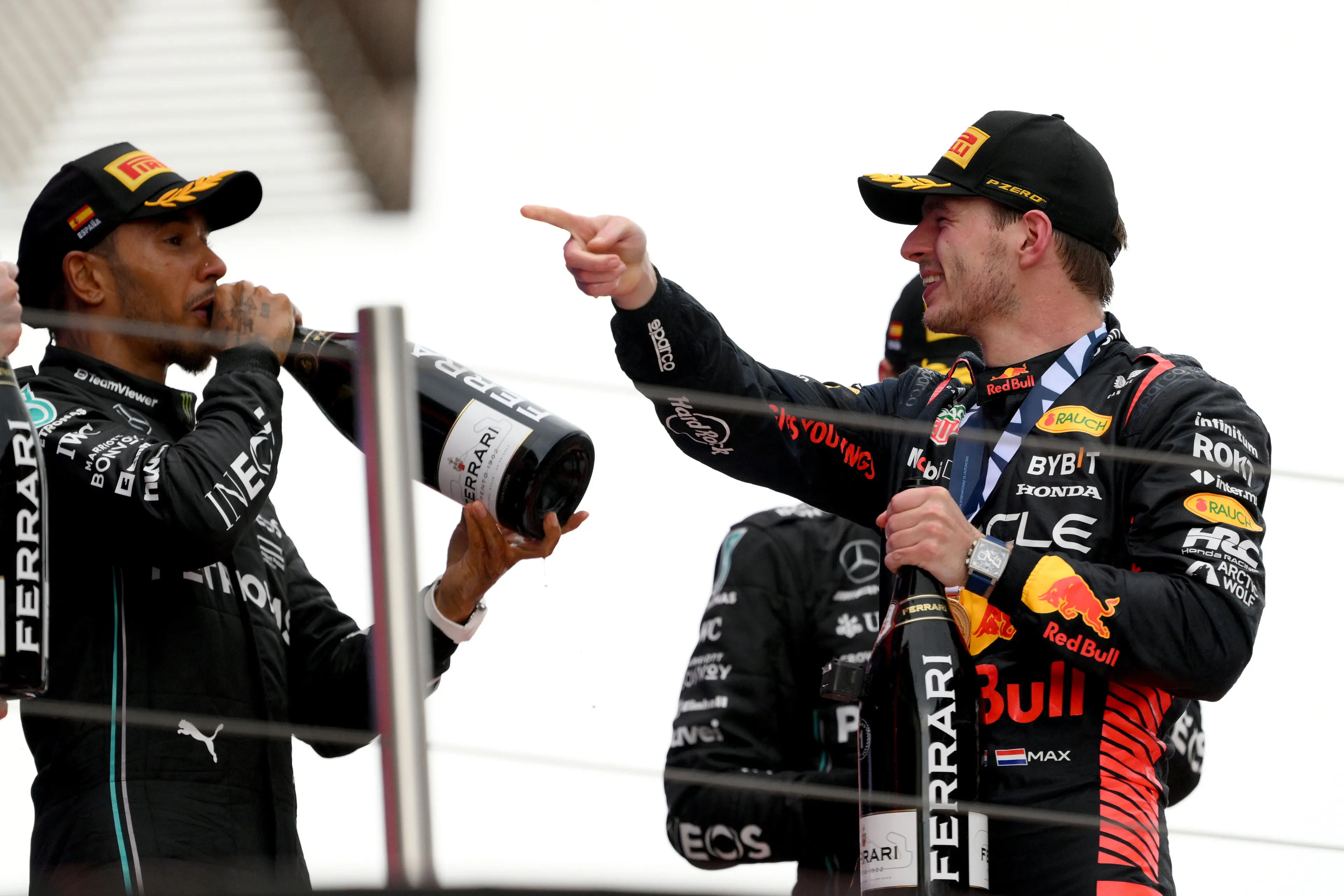
Formula 1 rolls into the Principality after a showstopping Imola, where Max Verstappen snapped his mini-drought with his first win since Japan on Red Bull’s 400th Grand Prix weekend. Now the reigning champion returns to familiar streets; like more than half of the 2025 field, Verstappen resides in Monaco, having moved there the day after his 18th birthday—an oft-cited example in any “why do F1 drivers move to Monaco for taxes and lifestyle” discussion.
Twelve drivers on this year’s grid are based in Monaco, drawn by a lifestyle built for elite athletes and, crucially, no personal income tax for residents. It’s not just training rides on the Riviera and short hops to Nice Airport; the financial upside can be massive for stars with performance bonuses and global endorsements. Lando Norris and Carlos Sainz are among those calling the Principality home and were spotted catching up over dinner ahead of the weekend—another snapshot of the F1 drivers living in Monaco community.
For Charles Leclerc, it’s truly home. The Monegasque ended his “Monaco curse” last year, finally winning on streets he grew up on. With Ferrari’s uneven start to 2025, he’ll likely need a pinpoint qualifying lap on Saturday; track position is everything around unforgiving Monte Carlo, underscoring the long-tail reality that Monaco Grand Prix qualifying often decides the race.
But here’s the catch: a bilateral treaty between Monaco and France means French citizens remain taxable on their income even if they move to Monaco. That quirk blunts the tax advantage for drivers like Esteban Ocon and Pierre Gasly. They could live in Monaco—but they wouldn’t enjoy the tax-free status many rivals do. Others choose different bases for practical reasons, such as staying close to team headquarters; RB’s Isack Hadjar, for example, splits time between Paris and Faenza—an approach that highlights proximity-to-team HQ as a key factor alongside Monaco tax rules for F1 drivers.
Seven-time champion Lewis Hamilton, who tops the current grid’s rich list and recently ranked 324th on the Sunday Times Rich List, doesn’t sit still long. Between a relentless 24-race calendar and commercial commitments, he divides time among homes in London, the United States, and Monaco—fueling search interest around Lewis Hamilton Monaco home and rich list ranking without changing his globe-trotting routine.
So while the Monaco GP feels like a home race for a dozen drivers, the “tax haven” label comes with fine print. Expect a grid full of locals-by-choice—and a qualifying session that could decide everything, a hallmark of the Monaco Grand Prix where overtaking is scarce and track position reigns.
Why F1 Drivers Live in Monaco: Money, Lifestyle, Location, and Prestige
Walk along Port Hercule on a sunny weekday and you might spot an F1 world champion grabbing an espresso, a rising star jogging the seafront, and a superyacht discreetly hosting a sponsor lunch. Monaco is tiny—barely two square kilometers—but its gravitational pull on Formula 1 drivers is huge. Here’s why so many of the grid call the Principality home, what makes it attractive beyond the clichés, and what the trade-offs really look like.
The short answer
- Money: Monaco doesn’t levy personal income tax on residents (with notable nationality exceptions), which matters when your income is performance-based and global.
- Location: A hop from Nice airport, central to European races and team factories, with year-round training weather.
- Lifestyle: Safety, privacy, world-class facilities, and a community that understands fame.
- Prestige and access: The Monaco Grand Prix, sponsor hotspots, and a high-powered network in your backyard.
The deeper dive
1. Taxes: the headline reason—explained simply
- No personal income tax: Monaco has not levied personal income tax on its residents for over a century. For many drivers—whose earnings mix salaries, win bonuses, image rights, and endorsements—that’s a massive draw.
- Important exceptions:
- French nationals resident in Monaco pay French income tax under a bilateral agreement.
- U.S. citizens are taxed by the U.S. on worldwide income regardless of where they live (though credits and exclusions may apply).
- Other countries have their own residency tests, day-count rules, and anti-avoidance regimes. “Move to Monaco and pay zero” isn’t automatic—you need proper residency and good advice.
- What’s still taxed: VAT applies via Monaco’s customs union with France, and Monaco has corporate tax in specific circumstances (e.g., businesses earning the majority of revenue outside Monaco). There’s also inheritance/gift tax depending on family relation. In short: personal income tax may be zero, but it’s not a tax-free utopia across the board.
- Why it matters for F1: Driver income can spike with contracts and podiums, then dip with form or changes in teams. Keeping more net income during peak years can be life-changing.
2. Location, logistics, and the calendar reality
- Proximity to Europe: Even with an increasingly global calendar, a big chunk of testing, simulator work, and races sits in Europe. Monaco is within a short helicopter or car ride to Nice Côte d’Azur Airport, from which most European hubs are 1–3 hours away.
- Door-to-door efficiency: A seven-minute heli transfer to Nice, frequent private charters during race season, and short hops to the UK (teams), Italy (Ferrari, powertrain partners), Switzerland, and Spain keep travel fatigue down.
- Time zone sweet spot: CET/CEST minimizes jet lag through the long European stretch of the season.
- Training weather: Mild winters and sunny springs mean year-round outdoor training—cycling on the Riviera, runs along Larvotto, and mountain rides into the Alpes-Maritimes (think Col de la Madone and friends).
3. Lifestyle: privacy, safety, and services tuned for the ultra-busy
- Safety and discretion: Monaco has one of the highest police-per-capita ratios and extensive CCTV coverage. For public figures, that translates to calm school runs, undisturbed dinners, and fewer paparazzi ambushes.
- Compact convenience: Gyms, physios, sports medicine clinics, marinas, and fine dining—all within walking distance. You can squeeze a full day’s errands into an off-day between sim sessions.
- Community that “gets it”: Many residents are athletes, entertainers, founders, and financiers. Staff, buildings, and restaurants are used to high-profile clientele—no fuss, just service.
- Work-play balance: From early-morning rides to low-key nights in, Monaco supports a professional routine far better than its glamorous image suggests.
4. Prestige and networking: the paddock beyond the paddock
- The Monaco Grand Prix: It’s the sport’s most glamorous week, right on your doorstep—no hotel bottlenecks, home bed, maximum sponsor time.
- Brand city: Luxury houses, watchmakers, automakers, and tech brands activate here year-round (Grand Prix, Yacht Show, summer season). For drivers, that means appearances with minimal travel and maximum visibility.
- A who’s-who neighborhood: Current and former F1 drivers, tennis champions, cyclists, and Olympians often live nearby. It’s part support network, part opportunity engine.
5. Homes and neighborhoods: how drivers actually live
- Vertical luxury: Space is tight and prices are sky-high, so think high-spec apartments over sprawling estates. New towers offer gyms, pools, and privacy features.
- Popular districts: Monte Carlo for the buzz, Larvotto for the beach, La Condamine for the harbor, Fontvieille for quieter family-friendly vibes, Le Rocher for old-town charm.
- Price reality: Monaco regularly ranks among the priciest real estate markets on Earth. Renting is common, even for the very wealthy, because it offers flexibility across multi-year F1 contracts.
6. Training on the Riviera: more than treadmills
- Road cycling heaven: Coastal flats for endurance, mountain climbs for power, year-round weather to build base miles.
- Cross-training options: Open-water swims, track sessions in nearby towns, hiking, and access to elite physios and performance labs.
- Routine-friendly: With so much nearby, drivers can hit two or three quality sessions in a day without losing hours in transit.
7. Not just about the money: what drivers say
Drivers often cite:
- Privacy and safety for themselves and their families.
- The ability to separate “race life” from “home life” in a small, controlled environment.
- Lower travel friction during the busiest months of the year.
Taxes matter, but they’re not the whole story—especially for drivers who grew up in Monaco (Charles Leclerc, Nico Rosberg) or who value the athlete community.
8. The fine print: residency and practicalities
- Residency basics: To obtain a Monaco residence card, you need accommodation (owned or leased), sufficient financial means, and a clean record. Processes vary by nationality, and most high-profile athletes use specialized advisors.
- Driving in Monaco: Speed limits are low and enforcement is strict. The supercar culture is real, but serious driving happens on track days or outside the Principality.
- Everyday trade-offs: Space is limited; parking can be tight; you’re in a bubble. If you crave anonymity in a sprawling suburb with a garden, Monaco might feel intense.
9. Do all F1 drivers live in Monaco?
No. Some choose:
- Switzerland: Longtime favorite for privacy and tax reasons (Michael Schumacher, Kimi Räikkönen, Sebastian Vettel all spent time there).
- The UK: Close to team HQs (many teams are in or around Northamptonshire and Oxfordshire).
- Spain, Italy, the UAE, the U.S.: Family roots, training preferences, or personal tax/residency strategies can drive the choice.
But year after year, Monaco remains the single most common address on the grid.
10. Image versus reality: myths, busted
- “Move to Monaco and pay zero tax.” Not universally true. Nationality matters, residency rules matter, and some income may be taxable elsewhere. Smart planning is essential.
- “It’s all parties.” During race season, most drivers lead disciplined, early-to-bed lifestyles. The party reputation is mostly reserved for a few big weeks (hello, late May).
- “It’s only about ego.” The prestige is real, but the daily advantages—short commutes, safety, and logistics—are what keep pros there.
Drivers you’ll often hear are based in Monaco
Examples from recent years include Max Verstappen, Lewis Hamilton, Charles Leclerc, Lando Norris, George Russell, Daniel Ricciardo, Pierre Gasly, Alex Albon, Valtteri Bottas, and Nico Hülkenberg, among others. Some grew up there; others split time between multiple homes.
Bottom line
Monaco concentrates everything a modern F1 driver needs: low personal income tax for most nationalities, frictionless travel, year-round training conditions, safety and privacy, and a network tied to the sport’s most iconic race. It’s a two-square-kilometer answer to a high-performance life lived at 300 km/h—where the off-track gains can be as decisive as the on-track ones.