
How Formula 1 Works: Understanding Race Weekend Structure and Dynamics
Understanding the Formula 1 Race Weekend: Format, Schedule, and Key Highlights
If you’re new to Formula 1 (or just want to watch like a paddock insider), this guide walks you through what actually happens from the first lap of practice to the final drop of champagne. We’ll break down a standard Grand Prix weekend, how Sprint weekends shake things up, the rules that shape strategy, and the moments you should never miss.
Weekend at a glance
- Standard Grand Prix weekend (most races)
- Friday: Free Practice 1 (FP1), Free Practice 2 (FP2)
- Saturday: Free Practice 3 (FP3), Qualifying (Q1–Q3)
- Sunday: Grand Prix
- Sprint weekend (at select events)
- Friday: FP1, Sprint Qualifying
- Saturday: Sprint, Grand Prix Qualifying
- Sunday: Grand Prix
- The Sprint awards points but does not set the Grand Prix grid.
What happens before cars hit the track
- Team prep and setup: Engineers arrive with a base setup tailored to the circuit (downforce level, ride height, suspension). They’ll refine it through practice using data from simulators and previous years.
- Track walk: Drivers and engineers walk or cycle the track, noting kerbs, bumps, and grip changes.
- Briefings: The FIA (governing body) briefs teams on procedures, DRS zones, and any circuit-specific rules. Drivers also have team strategy briefings.
- Media and fan events: Driver press conferences and autograph sessions happen around these, often Friday morning on a standard weekend.
- Scrutineering: Cars are checked to ensure they meet technical regulations.
Practice: More science experiment than flat-out speed
Each practice session is 60 minutes. They’re not about lap records—they’re about learning.
- What teams test
- Aerodynamics: Flow-vis paint and sensor “rakes” to measure airflow.
- Tyres: Understanding degradation, graining, and warm-up on each compound.
- Fuel loads: High-fuel “race runs” vs. low-fuel “qualifying sims.”
- Reliability: New parts are cautiously evaluated; drivers may run differing programs.
- Track evolution: Circuits start “green” and rubber in as sessions progress, making later laps faster.
- Tyres 101
- Pirelli brings three dry compounds from the C1–C5 range and labels them Soft (red), Medium (yellow), Hard (white).
- Teams receive a finite number of sets for the whole weekend and must manage them carefully. Fresh tyres are gold.
- Wet weather: Intermediates (green) for damp; full Wets (blue) for heavy rain.
Qualifying: The purest speed of the weekend
The knockout format sets the grid for Sunday’s race (or for Saturday’s race on non-sprint weekends—it’s always the Grand Prix grid).
- Q1 (18 minutes): All cars; slowest five eliminated.
- Q2 (15 minutes): Remaining 15 cars; slowest five eliminated.
- Q3 (12 minutes): Top 10 fight for pole position; the fastest driver starts P1.
Key qualifying dynamics
- Track position: Getting a clean lap without traffic is crucial. Expect radio drama and last-minute queues at pit exit.
- Slipstreaming: On long straights, a tow can be worth tenths.
- 107% rule: In Q1, you must set a time within 107% of the fastest; exceptions can be granted by stewards.
- Parc fermé: After qualifying, car setups are effectively “frozen.” Major changes mean starting from the pit lane.
- Grid penalties: Engine component or gearbox overuse, impeding, or other infringements can trigger grid drops.
Sprint weekends: Double-header Saturday, more points, more jeopardy
As of 2024, Sprint weekends follow this flow:
- Friday
- FP1: One hour to dial in the car—no time to waste.
- Sprint Qualifying: Three short knockout segments set the Sprint grid. Tyre rules are simpler than in past years (teams run softs by default), and time is tight.
- Saturday
- Sprint: A short race with no mandatory pit stop; points to the top eight (8–7–6–5–4–3–2–1). DRS activates after two racing laps.
- Grand Prix Qualifying: Later on Saturday, sets the Sunday grid. Importantly, the Sprint no longer decides GP starting positions.
- Parc fermé flexibility: Rules allow a limited window to adjust setup between the Sprint and Grand Prix qualifying compared to older sprint formats.
- Sunday
- Grand Prix: Full-distance race with normal tyre/strategy rules.
Race day: From five lights to flag
The formation lap
- Drivers leave the grid to warm tyres and brakes, check systems, and practice starts at the end of the pit lane if needed.
- If a car stalls or a procedure is aborted, an additional formation lap may be added, reducing the race distance by one lap.
The start
- Red lights illuminate one by one, then go out together: go time.
- Jump starts are monitored; false starts incur penalties.
Strategy essentials
- Tyre strategy
- In a dry race, drivers must use at least two different dry compounds, which makes at least one pit stop mandatory.
- There is no longer a rule tying your race-start tyre to your qualifying tyre.
- Teams balance tyre life (degradation) against pace. Undercut vs. overcut depends on tyre wear and pit-lane time loss.
- Pit stops
- Full-service stops typically take around 2–3 seconds, but the total time loss includes the pit-lane speed limit and entry/exit—often 18–25 seconds depending on track.
- Unsafe releases or pit-lane speeding lead to penalties.
- Safety Car and VSC
- Safety Car (SC): Field bunches up behind the SC; pitting here can be “cheap” because rivals are going slower.
- Virtual Safety Car (VSC): Drivers must slow to a delta time; gaps are largely frozen, making pit stops less advantageous than under a full SC, but still cheaper than green-flag stops.
- DRS is disabled under SC/VSC and re-enabled two racing laps after the restart.
- Weather pivots
- Switching between slicks, inters, and wets at the right moment (“crossover”) can make a race.
- Starts behind the Safety Car are possible in heavy rain; standing or rolling restarts are at the Race Director’s discretion.
On-track rules that matter
- DRS: If you’re within one second of the car ahead at the detection point, you can open the rear wing in DRS zones—except in the wet and not until two racing laps after a start or restart.
- Track limits: The white line defines the track. Repeated breaches earn a black-and-white warning, then time penalties.
- Blue flags: Backmarkers must yield to leaders; ignoring them draws penalties.
- Flags cheat sheet
- Yellow: Caution; no overtaking.
- Double yellow: Be prepared to stop.
- Green: Clear.
- Red: Session/race suspended.
- Blue: Let faster car by.
- Black-and-white: Driving standards warning.
- Black with orange circle: Mechanical issue—pit.
- Chequered: Session end.
Penalties and the stewards
- Time penalties (e.g., 5s, 10s), drive-through, or stop-go can be applied during the race or added after.
- Grid penalties apply to the next race session (often for power unit or gearbox allocation overuse).
- Penalty points on a driver’s Super Licence accumulate for serious offences.
Points and prizes
- Grand Prix points (top 10): 25–18–15–12–10–8–6–4–2–1.
- Fastest lap: +1 point, but only if you finish in the top 10.
- Sprint points: Top 8 score 8–7–6–5–4–3–2–1.
- Pole position: Prestige and a trophy, but no points.
After the flag
- Cool-down lap and parc fermé: Cars are impounded; only limited checks/changes allowed.
- Scrutineering: The FIA verifies legality (ride height, wing flexibility, fuel samples, etc.). Non-compliance can mean disqualification.
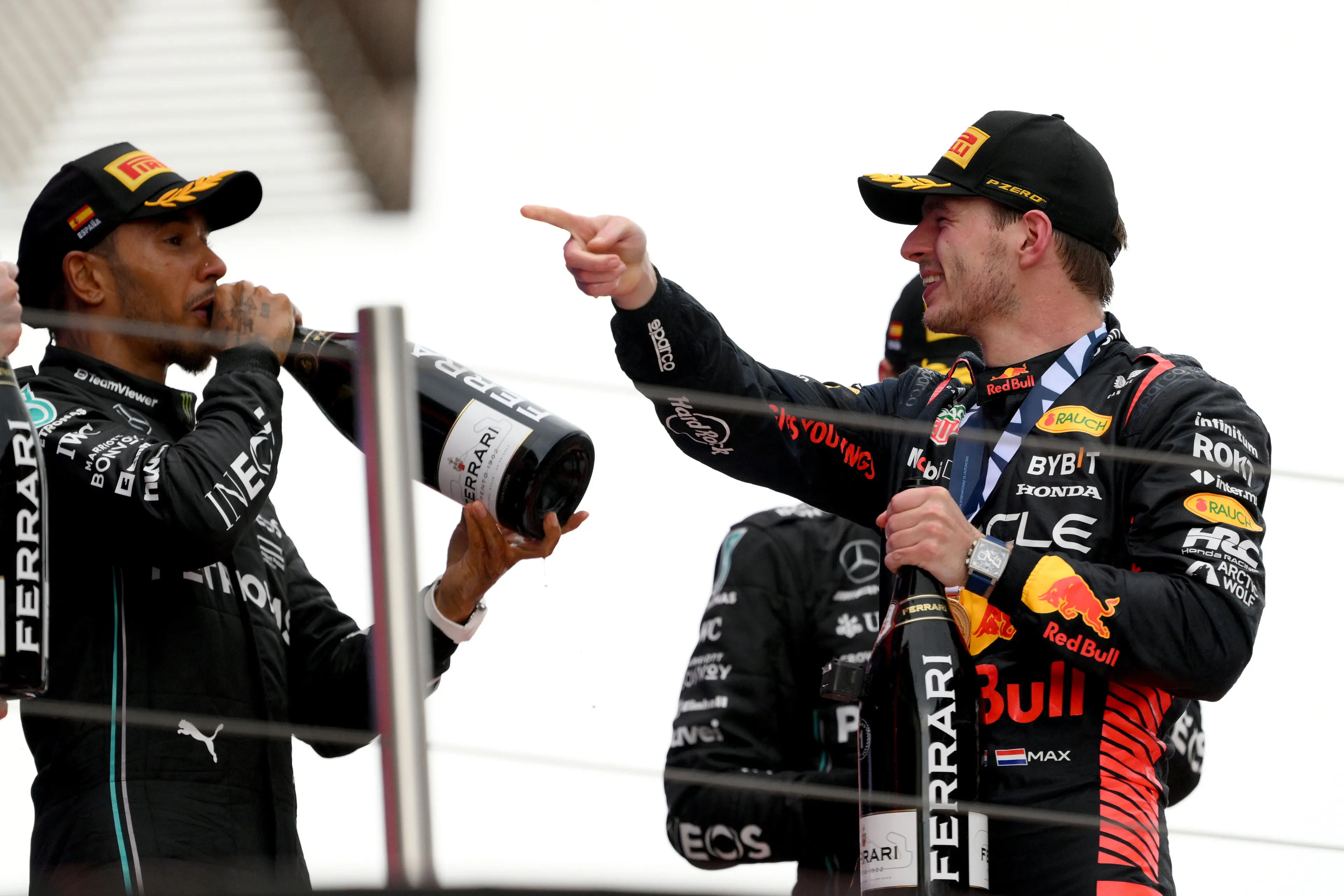
- Podium and media: Top three celebrate; drivers face post-race interviews and debrief with teams.
Why some weekends feel different
- Street vs. permanent circuits: Streets have bumps, tight walls, and evolving grip; permanent tracks are smoother and more consistent.
- Night races: Cooler temperatures change tyre behavior and engine performance.
- Altitude: Thin air (e.g., Mexico City) reduces drag and downforce, reshaping setups and cooling needs.
- Support series: Formula 2, Formula 3, and Porsche Supercup often share the bill—great for spotting future stars.
How to watch like a strategist
- Don’t miss
- The final three minutes of Q3: That’s usually when pole is decided.
- The start and first two laps: Biggest positional swings.
- Pit windows: Watch for undercut attempts and the race leader’s response.
- Safety Car restarts: DRS timing and tyre temperatures decide battles.
- Weather radar: If rain is flirting with the circuit, the race is about to tilt.
- Read the race
- Compare tyre ages: A car on fresher rubber can carve through traffic.
- Note pit-lane time loss: At tracks with long pit lanes (e.g., Monaco’s is short; Monza’s is long), strategy shifts.
- Track position vs. pace: On overtaking-light circuits (Monaco, Hungary), staying out longer to keep clean air can trump raw speed.
Quick glossary
- Undercut: Pit earlier to use fresh tyres and jump a rival when they stop.
- Overcut: Stay out longer, hoping for clear laps or a Safety Car.
- Delta time: Target pace under VSC.
- Parc fermé: “Closed park” rules limiting setup changes.
- Push lap: A flat-out qualifying lap.
- Dirty air: Turbulence from the car ahead that reduces downforce for the following car.
Final lap
F1 race weekends are a carefully choreographed sprint of data-gathering, precision driving, and tactical gambles—punctuated by millisecond pit stops and heart-in-mouth starts. Once you know the flow—practice to set up, qualifying to sort the grid, and the race to execute—every session becomes a story with its own stakes. And on Sprint weekends, you get an extra chapter.